


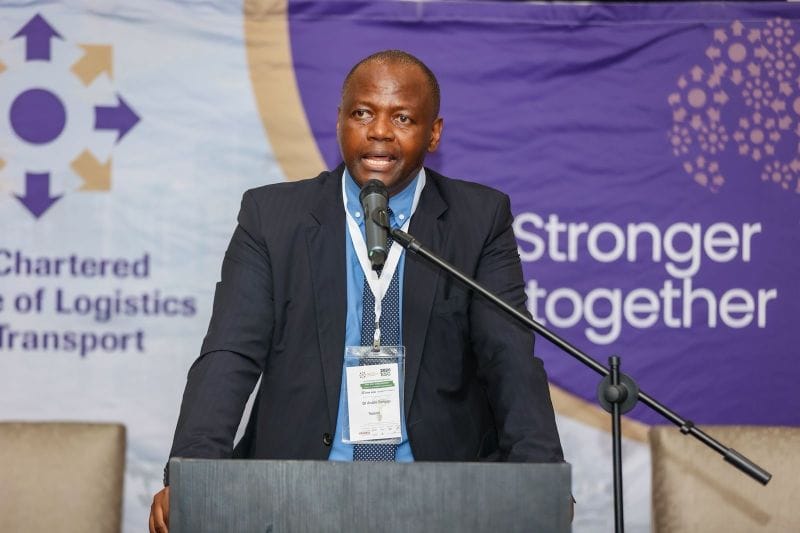
South Africa’s transport and logistics sector is facing increasing pressure to reduce emissions, improve operational efficiency, and demonstrate meaningful ESG performance. These challenges, and the opportunities they present, were at the centre of discussions at the Chartered Institute of Logistics and Transport South Africa (CILTSA) ESG Conference 2026, held in Johannesburg.
Opening the conference, Fundiswa Mahlanyana, Executive for Corporate Planning and Strategy at Isuzu Motors South Africa, argued that sustainability has evolved from a compliance requirement into a core business capability. She highlighted several forces reshaping the industry, including the shift towards new energy vehicles, tightening emissions regulations in export markets, growing demand for credible ESG data, increased localisation requirements, and the rise of transition finance. Mahlanyana emphasised that businesses should prioritise operational efficiency and supplier development before making large-scale investments in new technologies, citing Isuzu’s investment in local manufacturing capacity as an example of how sustainability and industrialisation can advance together.
Delivering the keynote address, Dr Andile Sangqu, Chairperson of Transnet, focused on what he described as the need to align capital, capability, and commitment across the logistics value chain. He argued that the sector’s greatest challenge is not simply financing the transition but ensuring that the necessary skills exist to support it. Sangqu called for greater collaboration between industry, educational institutions, and communities to develop local expertise in ESG, logistics, and supply chain management. He also stressed that inclusive procurement and support for small businesses should be viewed as economic resilience strategies rather than compliance obligations.
The role of technology in driving sustainability was explored by Renko Bergh, Co-Founder of Ctrl Fleet, who presented a compelling case for operational efficiency as the foundation of ESG performance. Bergh demonstrated how route optimisation, fuel management systems, and integrated fleet technologies can simultaneously reduce emissions, lower operating costs, and improve service delivery. He argued that many logistics operators still focus on sustainability and efficiency as separate objectives when, in reality, they are closely connected.

One of the most practical case studies came from Michelle van den Berg, Head of TDT Projects at Takealot Fulfilment Solutions (TFS), who presented Powering the Middle Mile: Takealot Fulfilment Solutions’ EV & Solar Greenprint for Scalable, Sustainable Logistics. Van den Berg outlined TFS’s measured approach to fleet electrification, which began with a single electric truck operating under local conditions before gradually expanding into a larger fleet supported by solar-powered charging infrastructure. She explained how the company used operational data to identify suitable routes, validate business cases, and build confidence for future investment. The initiative now includes electric vehicles operating across multiple regions and solar installations supporting charging infrastructure, with the long-term objective of reducing exposure to fuel price volatility and grid instability while building a scalable model for sustainable logistics.
The conference also explored how businesses can access funding to support sustainability initiatives. During a panel discussion featuring representatives from the Industrial Development Corporation (IDC), Development Bank of Southern Africa (DBSA), Absa, Nedbank, and industry stakeholders, participants agreed that capital is increasingly available for green transport and logistics projects. However, they cautioned that funding is being directed towards businesses that can demonstrate clear transition plans, strong governance structures, and credible ESG reporting systems. The discussion also highlighted the importance of ensuring that green investments contribute to local supplier development and broader economic inclusion.
Across all presentations, a common message emerged: South Africa’s transport and logistics sector cannot simply import sustainability solutions developed elsewhere. The transition must be grounded in local realities, including infrastructure constraints, skills development needs, and the imperative to support industrialisation and job creation. While the path to a greener logistics sector will require significant investment, speakers agreed that the combination of innovation, collaboration, and practical implementation is already laying the foundation for a more resilient and competitive industry.
The conference ultimately reinforced that sustainability is no longer a future consideration for the transport and logistics sector. It has become a business imperative that will shape competitiveness, investment, and growth for years to come.

