


If you are looking for a new car in South Africa without turning your monthly budget upside down, you have probably noticed one thing: cheap cars are not as cheap as they used to be.
But there are still some small cars that offer relatively low purchase prices, reasonable fuel consumption and enough practicality for everyday life.
We compared two recent lists from TopAuto and Auto.co.za, looking at both price and real-world appeal. TopAuto’s latest sales data is particularly useful because it shows which small hatchbacks South Africans are actually buying. In July 2026, the 10 best-selling hatchbacks accounted for 11,051 sales, or 19.14% of all vehicles sold that month.
Auto.co.za, meanwhile, focuses more directly on affordability, fuel economy, practicality and features.
Putting the two together gives us a useful picture of some of the best affordable cars in South Africa in 2026.
-
Renault Kwid – from R178,799

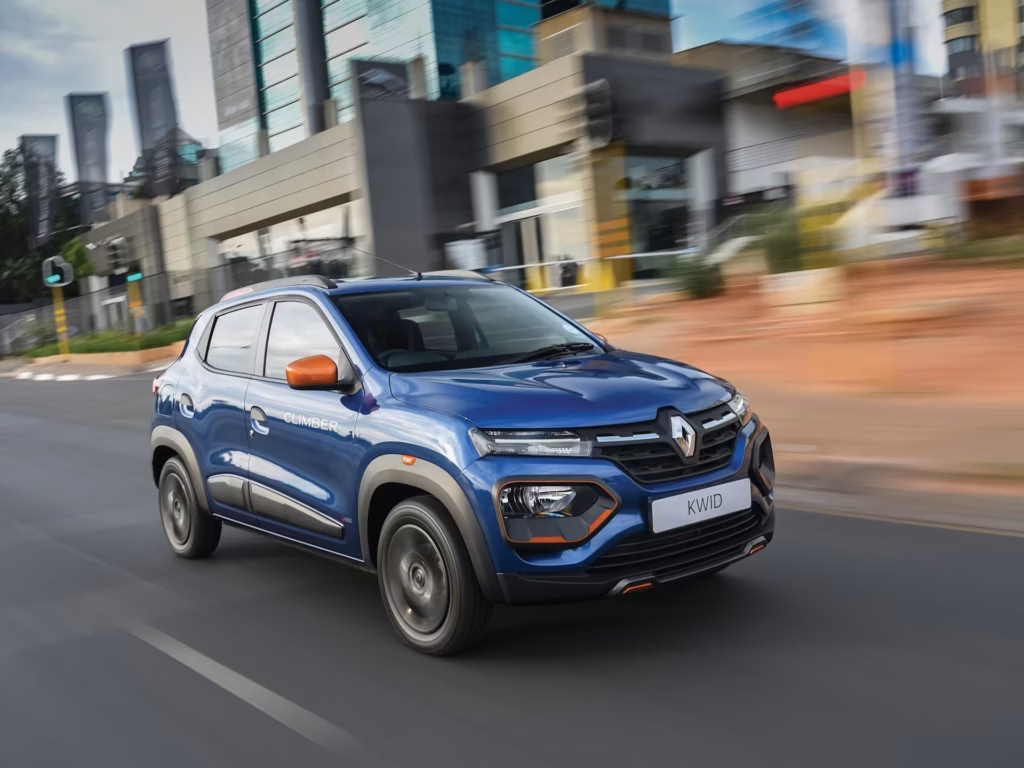
If your first question is, “What is the cheapest new car in South Africa?”, the Renault Kwid is currently the obvious starting point.
At R178,799, it sits at the bottom of the new-car price ladder. It has a 1.0-litre petrol engine producing 50kW and 91Nm, with claimed fuel consumption of around 4.7–4.9L/100km depending on the source and specification.
For someone driving to work every day, doing school runs or simply looking for affordable transport around town, that matters.
The Kwid is small, easy to park and relatively light on fuel. It also comes with features such as an 8-inch touchscreen, smartphone connectivity and a 279-litre boot.
Best for: Buyers who want the lowest possible new-car price.
-
Toyota Vitz – from around R178,800

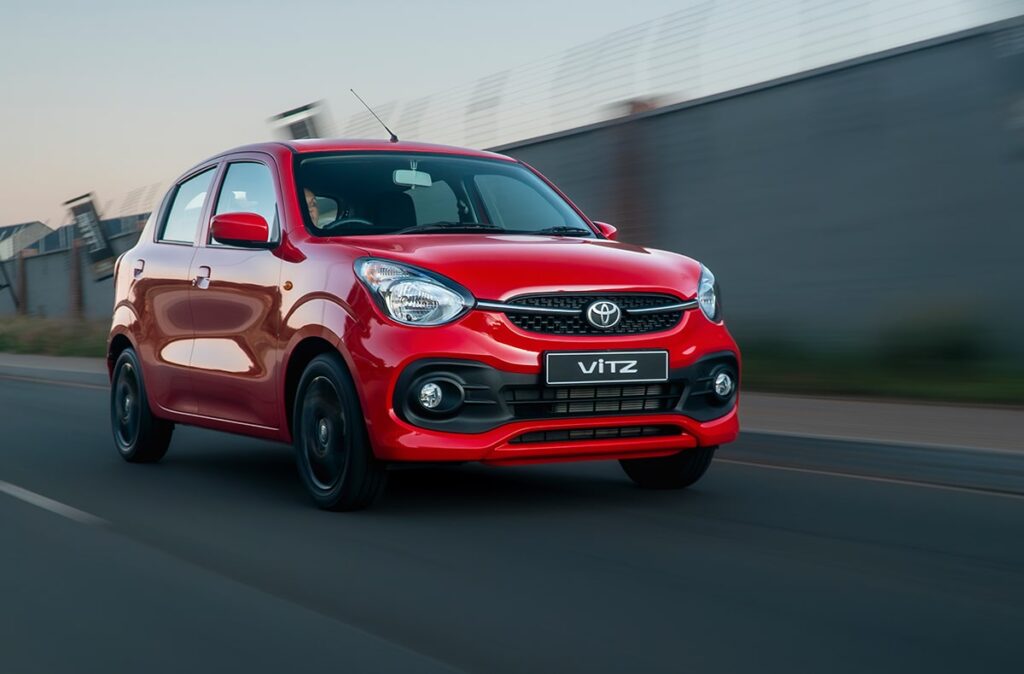
The Toyota Vitz has become one of the most interesting budget cars in South Africa.
Its 1.0-litre three-cylinder engine produces 49kW and 89 Nm, while the claimed fuel consumption is around 4.4 L/100 km. It also has a 295-litre boot, making it surprisingly practical for a small hatchback.
The Vitz is also attracting plenty of attention from South African motorists. TopAuto reported that 855 Vitz units were sold in July 2026, putting it among the country’s 10 best-selling hatchbacks.
For many buyers, the Toyota badge and widespread dealer network will also be important considerations.
Best for: Buyers who want a small, economical Toyota at a low entry price.
-
Suzuki S-Presso – from R178,900

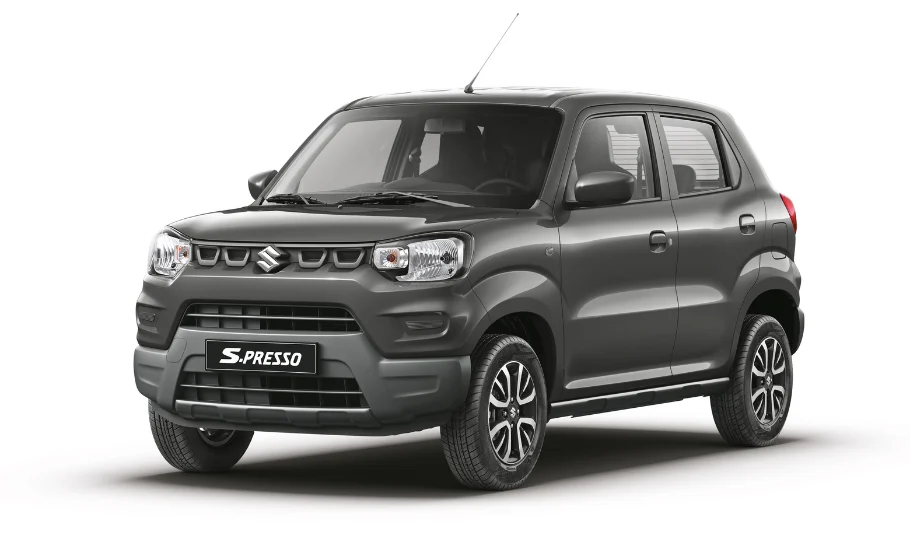
The Suzuki S-Presso is one of those cars that looks different from almost everything else in the parking lot.
Its biggest advantage is not just its price. With 181mm of ground clearance, it is also better suited to dealing with some of the rougher roads, potholes and uneven streets that South African drivers encounter.
The 1.0-litre engine produces 49kW and 89Nm, while fuel consumption is around 4.4–4.6L/100km.
It is not going to win any drag races, but that is hardly the point. This is a car designed to get you from home to work, the shops, school or campus without demanding too much from your pocket.
Best for: City drivers who want low running costs and extra ground clearance.
-
Suzuki Celerio – from R188,900

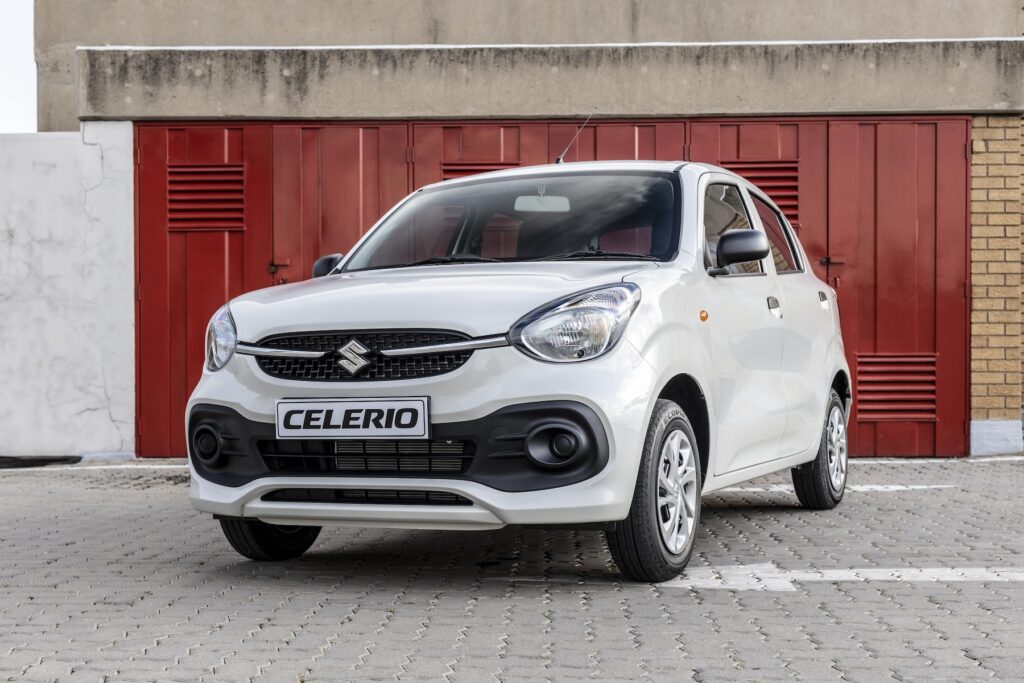
The Suzuki Celerio is one of the quieter options on this list, but that does not mean it should be ignored.
Its 1.0-litre engine produces 49kW and 89Nm, while its claimed fuel consumption can be as low as 4.2L/100km.
That makes the Celerio particularly interesting for people who spend a lot of time commuting.
It also has a 295-litre boot, ESP, ABS with EBD and brake assist, with smartphone connectivity available on higher specifications.
Best for: Commuters who put fuel economy high on their shopping list.
-
Tata Tiago – from R189,900
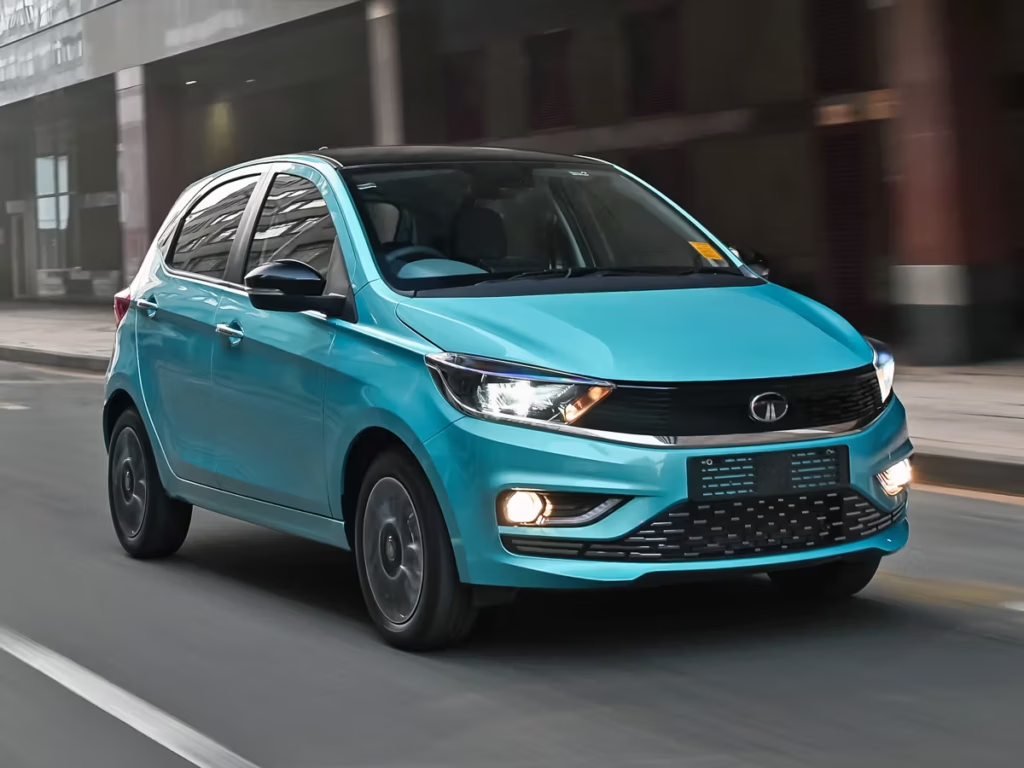
The Tata Tiago is the wildcard in this group.
It costs less than R190,000 but comes with a 1.2-litre petrol engine producing 63kW and 113Nm. That makes it considerably more powerful than several of the 1.0-litre cars around it.
It also offers a 242-litre boot, reverse camera, touchscreen infotainment and ISOFIX mounts.
TopAuto reported that 587 Tiagos were sold in South Africa in July 2026, placing it seventh among the country’s best-selling hatchbacks for that month.
Best for: Buyers who want more engine power without moving too far beyond the R190,000 mark.
-
Proton Saga – from R209,900


If a hatchback is simply too small for your needs, the Proton Saga offers something different: a small sedan at a relatively affordable price.
The Saga uses a 1.3-litre petrol engine producing 70kW and 120Nm. It is available with manual or automatic transmission, which is useful for drivers who spend their mornings crawling through traffic.
The sedan body also gives it more of a traditional family-car feel.
Best for: Small families and buyers who want a sedan rather than a hatchback.
-
Renault Triber – from R218,999

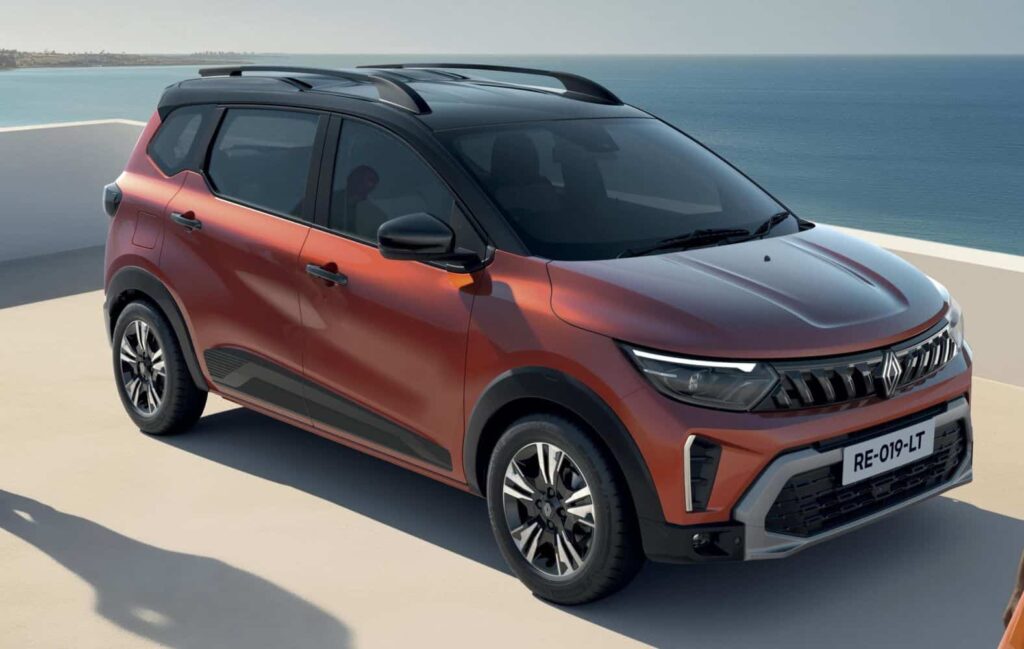
Sometimes affordable does not mean tiny.
The Renault Triber is particularly interesting for families because it offers seven seats while remaining below R220,000 at its starting price.
Its 1.0-litre engine produces 52kW and 96Nm. The engine is not designed for racing, but the Triber’s strength is flexibility.
With different seating configurations and up to 625 litres of boot space in five-seat mode, it can be useful for families who need to carry people, shopping bags and everything else that somehow ends up in the car.
Best for: Families looking for maximum practicality on a budget.
-
Renault Kiger – from R219,999
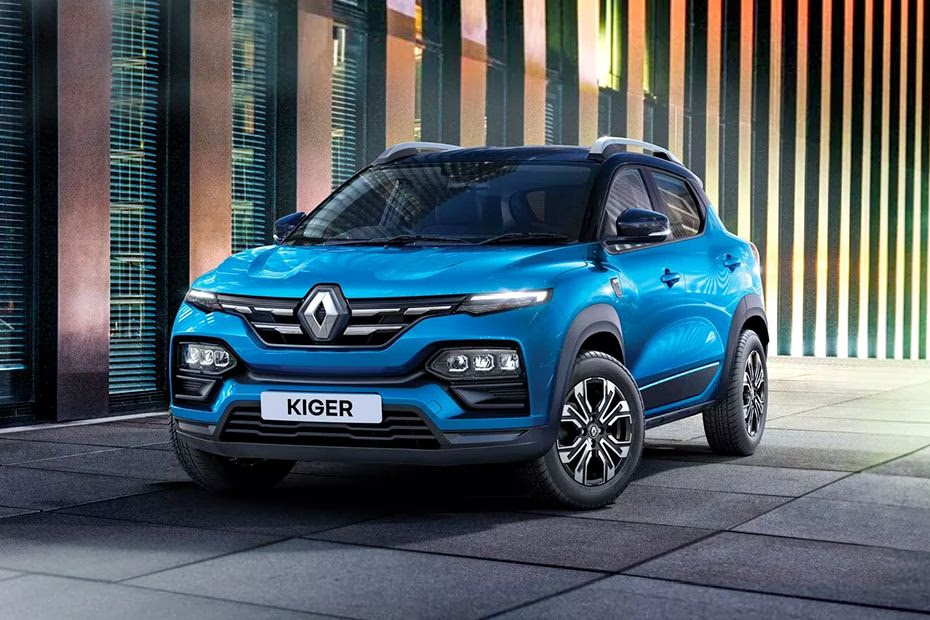
If you want something that looks more like an SUV without paying traditional SUV money, the Renault Kiger is worth considering.
It starts at R219,999 and offers a 1.0-litre petrol engine producing 53kW and 96Nm.
It also has 205mm of ground clearance and a 405-litre boot, giving it a more substantial feel than the tiny hatchbacks at the top of this list.
For someone who wants a budget car but does not want to feel like they have bought the smallest car on the road, the Kiger makes a compelling case.
Best for: Buyers looking for an affordable small crossover.
-
Hyundai Grand i10 – from R224,900

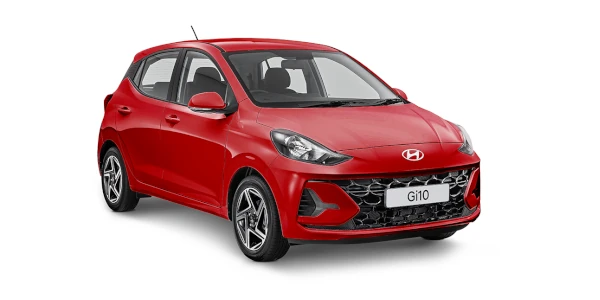
The Hyundai Grand i10 has been a familiar name among South African buyers looking for affordable motoring.
Starting at R224,900, it costs more than the Kwid, Vitz and S-Presso, but it offers a more rounded package.
The 1.0-litre engine produces 48.5kW and 94Nm, with claimed fuel consumption of around 5.5L/100km. It also offers smartphone connectivity, a reverse camera and rear parking assistance.
It is also not just affordable on paper. TopAuto reported 1,551 Grand i10 sales in July 2026, making it the third best-selling hatchback in the country that month.
Best for: Buyers who want a balanced everyday car from an established brand.
-
Suzuki Swift – from R227,900

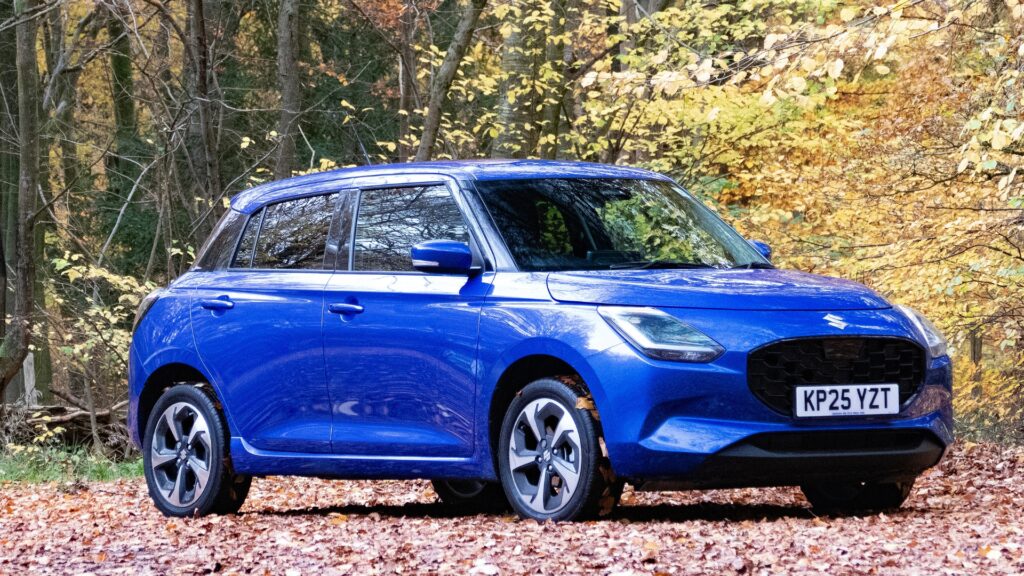
The Suzuki Swift rounds off the list and proves that an affordable car does not necessarily have to be boring.
The Swift starts at R227,900 and uses a 1.2-litre petrol engine producing around 60–61kW and 112–113Nm, depending on specification. Claimed fuel consumption starts at around 4.4–4.9L/100km.
More importantly, South Africans are buying it.
The Swift was the second-best-selling hatchback in July 2026, with 1,916 units sold.
That makes it one of the strongest combinations of affordability, popularity and everyday usability on this list.
Best for: Drivers who want an affordable car that is still enjoyable to drive.
So, which affordable car is the best?
There is no single answer because the cheapest car is not automatically the best car for every driver.
If your biggest concern is purchase price, the Renault Kwid is hard to beat at R178,799.
If you want fuel economy, the Suzuki Celerio stands out with claimed consumption from around 4.2L/100km.
If you want Toyota’s reputation and a practical small hatchback, the Vitz deserves a serious look.
If you want more power for your money, the Tata Tiago is interesting because its 1.2-litre engine produces 63kW.
And if you have a family, the Renault Triber offers something the smaller hatchbacks simply cannot: seven seats.
The cheapest car is not necessarily the most popular one.
In July 2026, the VW Polo Vivo was the country’s best-selling hatchback, with 2,513 units sold. The Suzuki Swift followed with 1,916, while the Hyundai Grand i10 recorded 1,551 sales. The Toyota Starlet sold 1,453 units.
The Toyota Vitz, Tata Tiago and Renault Kwid also made the top 10.
This suggests that South African buyers are balancing price, fuel consumption, brand reputation, practicality, and resale value, rather than simply buying the car with the lowest sticker price.
This is perhaps the most important thing to remember before signing a finance agreement.
A car advertised at R178,799 does not mean your monthly cost will only be the finance instalment.
You still need to budget for:
- Car insurance
- Fuel
- Maintenance
- Tyres
- Licensing and registration
- Finance interest
- Parking and tolls
- Unexpected repairs
For example, TopAuto‘s calculations show that a Renault Kwid priced at R178,799 could translate to a monthly repayment of roughly R3,843 under its financing assumptions. But that figure does not include the other costs of owning a car.
That is why shoppers should look at the total cost of ownership, not just the price displayed on the windscreen.
South Africans looking for an affordable new car still have options, but the days when a brand-new car could easily be bought for well below R150,000 are long gone.
The current entry point is around R178,799, with the Renault Kwid, Toyota Vitz and Suzuki S-Presso separated by only R101 at the top of the affordability table.
For everyday South Africans, the best choice will ultimately depend on what the car needs to do.
A student might prioritise low fuel consumption and easy parking. A commuter may care more about monthly running costs. A parent may need boot space and safety features. Someone doing e-hailing will have a completely different set of priorities.
The good news is that affordable motoring in South Africa has not disappeared completely. You just have to look beyond the price tag and ask the bigger question: “What will this car actually cost me every month?”
Prices and specifications can change, and advertised starting prices may vary by model year, trim level, dealer promotion and finance offer. Buyers should confirm the latest price and specifications with the manufacturer or dealer before purchasing.

