


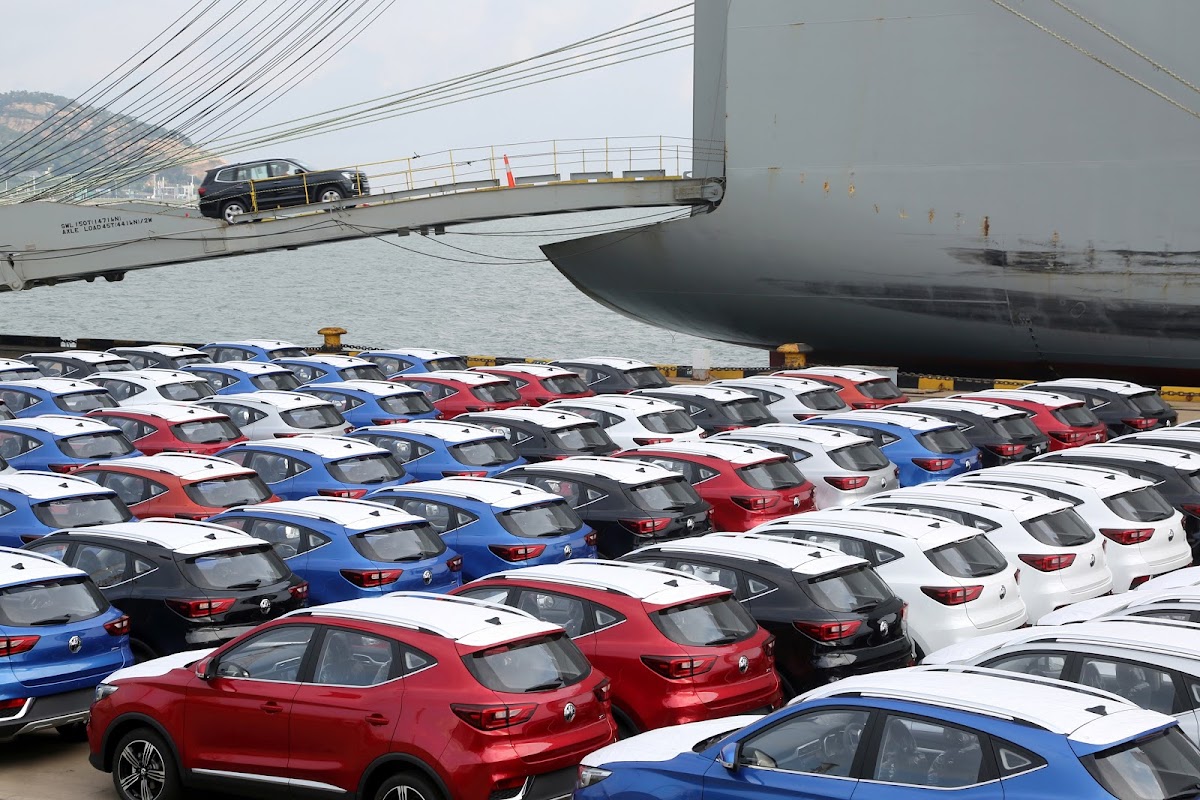
South Africa’s car exports to the United States have plummeted following new import tariffs introduced by US President Donald Trump. According to the National Association of Automobile Manufacturers of South Africa (Naamsa), vehicle exports fell 73% in the first quarter of 2025 compared to the same period last year, with even steeper drops of 80% in April and 85% in May.
The US is South Africa’s second-largest trading partner and a major destination for locally manufactured vehicles, previously enjoying duty-free status under the African Growth and Opportunity Act (Agoa). However, that advantage has been eroded by the imposition of a 25% tariff on cars in April, extended to include automotive parts in May. A further 30% tariff on broader South African exports is set to take effect from 1 August.
Naamsa CEO Mikel Mabasa described the situation as a looming socio-economic crisis. “This isn’t just about trade. Thousands of jobs are at stake, especially in communities like East London where the auto industry is the backbone of the local economy,” he warned.
In a bid to avert further damage, South Africa previously proposed a trade deal allowing 40,000 vehicles and certain locally produced components to enter the US duty-free each year. However, Trump’s latest round of tariffs announced in July appears to override such negotiations.
The automotive sector remains a cornerstone of South Africa’s participation in Agoa, accounting for 64% of all trade under the programme in 2024 and generating R28.6 billion (\$1.6 billion) in exports.
Mabasa stressed that while export diversification is necessary, it cannot happen overnight. Global competitors are already stepping in to fill South Africa’s market share in the US, placing additional pressure on local automakers like Mercedes-Benz, which may be forced to cut production, absorb higher costs, or reconsider future investments.
“If we lose key export markets like the US, we risk seeing once-thriving industrial hubs become ghost towns,” Mabasa said.

